







Engineering

Project 05 / 06

Assistive Nose-Wiping Device for Hiking

A team developed and evaluated two wearable prototypes for hands-free nose wiping during hiking, using weight, cost, comfort, durability, security, hygiene, and ease-of-use criteria for an identified need.

Two wearable prototype directions
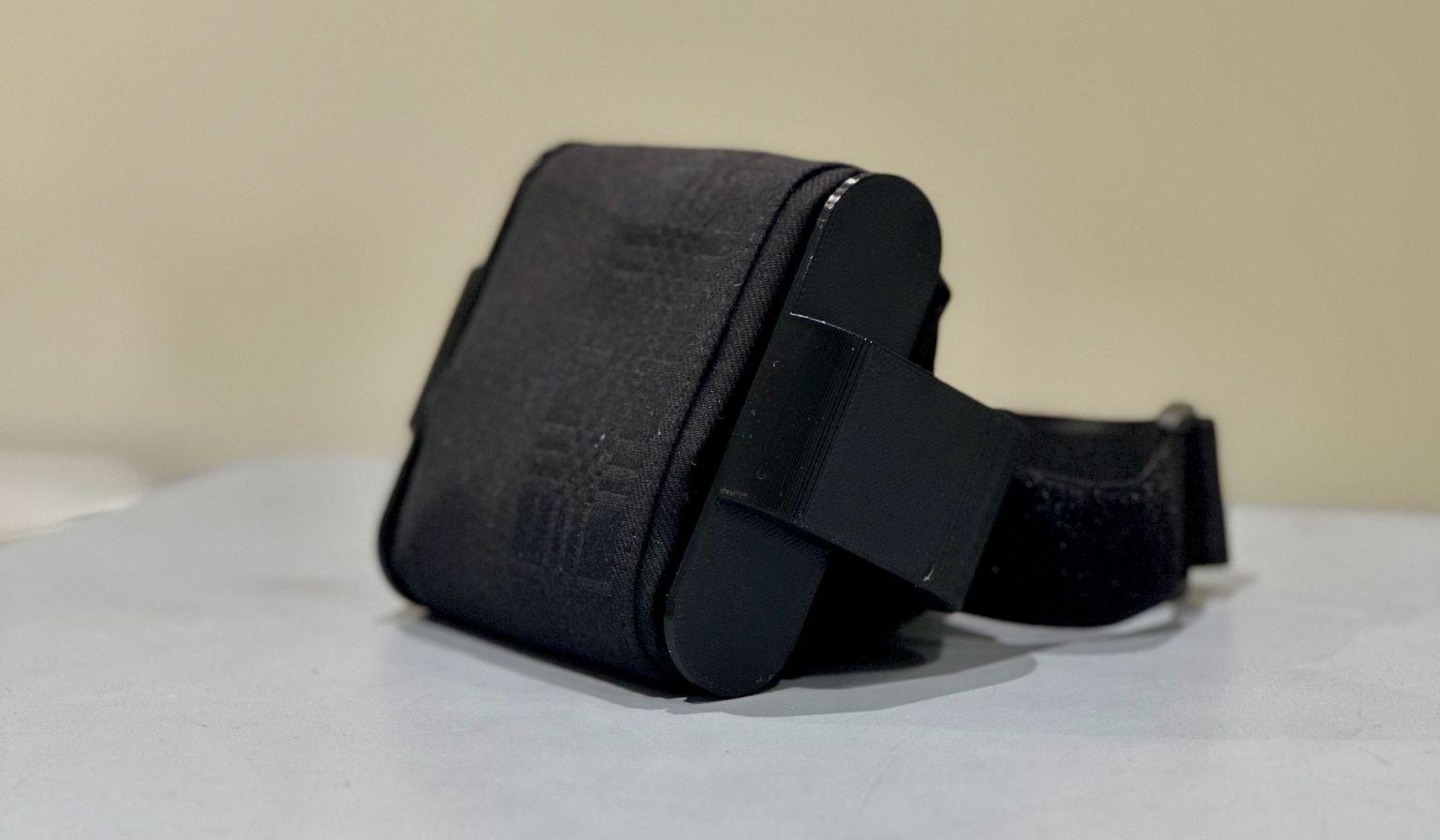
Design 1 — upper-arm prototypeUpper-arm-mounted rounded 3D-printed wiping surface with a Velcro strap and rotating handkerchief.
Side view of the Design 1 upper-arm prototype with a rounded 3D-printed wiping surface, wrapped handkerchief, and Velcro strap.
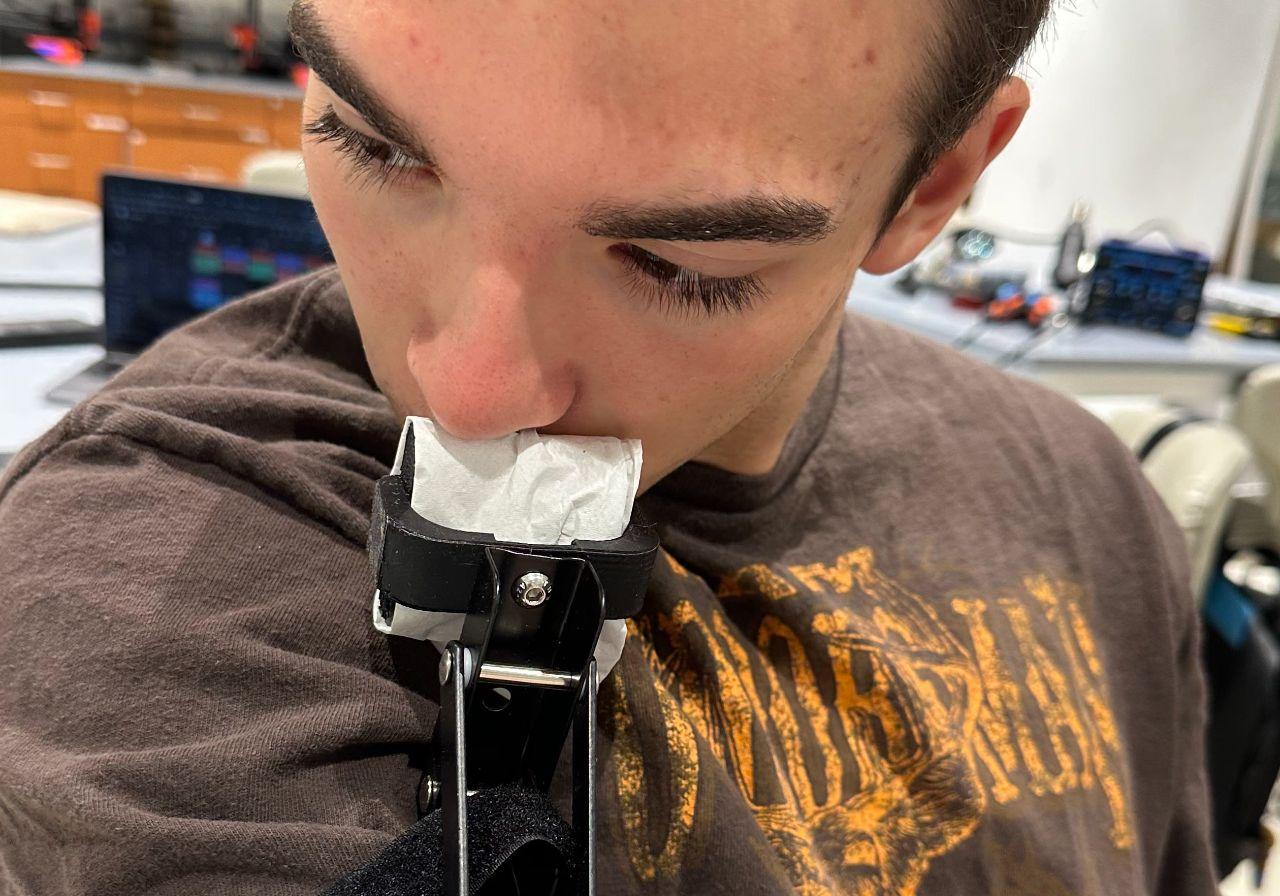
Design 2 — forearm extension, student evaluationForearm-mounted extension shown during a student evaluation; the pictured person is not identified as the intended user.
Design 2 forearm extension shown during a student evaluation, with a wiping surface near the face.

Reported: Design 1 met the weight and intended-form goals at 0.5 lb and about $15; Design 2 was functional at about 1.5 lb but did not achieve its planned folding form.

01A hands-free need on the trail

The project begins with the identified need and the criteria used to assess two wearable prototype directions.
The final need statement identifies Lisa, an avid hiker with limited arm mobility and grip strength, who needed a lightweight and hygienic way to independently wipe her nose during hikes. The project addressed that stated need through wearable prototypes rather than through a medical or clinical intervention.

The final report assesses the concepts against weight, cost, comfort, durability, security, hygiene, ease of use, and form. Those criteria provide the basis for interpreting the two prototypes and their tradeoffs.

02Two wearable directions

The team carried two wearable forms forward as different responses to the same need and criteria.

The final concepts took two distinct mounting approaches. Design 1 placed the wiping surface high on the upper arm, while Design 2 extended the wiping surface from a forearm sleeve toward the face.

Supporting project records document team brainstorming, design-option evaluation, feasibility decisions, iterative assessment, Fusion 360 work, 3D printing, and prototype testing. The available evidence supports the two directions as a team effort, but does not establish a complete step-by-step ideation chronology.

03Design 1: upper-arm rotating surface

The selected direction combined an upper-arm mount with a rotating fabric surface.

Design 1 used a rounded 3D-printed tray worn high on the bicep and held in place with a Velcro strap. A handkerchief slides around the device so that a fresh section is exposed with each wipe.

The presentation describes the intended hands-free motion as tilting the head and slightly leaning forward. That describes the prototype's intended operation; it does not establish long-term use, field use, or a measured hygiene outcome.

Mechanism evidence

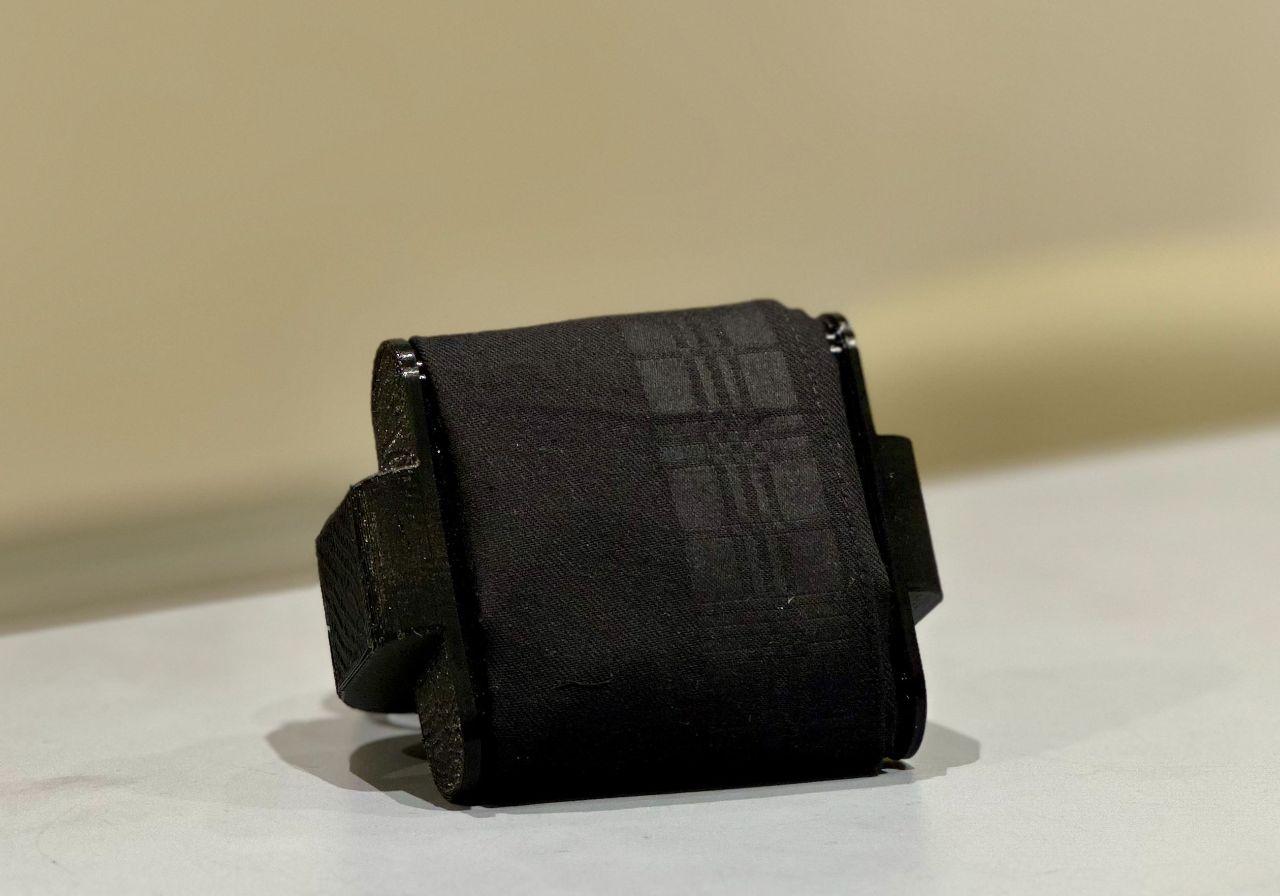
Front view of Design 1 showing a handkerchief wrapped around the 3D-printed wiping surface.
Design 1 — rotating fabric surfaceDesign 1 detail: the wrapped handkerchief moves around the wiping surface to present a fresh section for a subsequent wipe.

The rotating handkerchief is the project's stated hygiene mechanism; the source does not quantify a hygiene improvement.

Reported Design 1 outcome

0.5 lb · ≈ $15

The final report identifies Design 1 as the stronger final outcome because it met the reported weight and intended-form goals.

Comfort and security findings are bounded to the documented student assessment.

04Design 2: function with a visible compromise

The forearm design demonstrated the basic function while retaining a material form and weight tradeoff.

Design 2 used a rigid extension attached to a forearm sleeve with two parallel Velcro straps. A smaller 3D-printed wiping surface at the end held the rotating handkerchief and brought the wiping surface closer to the face.

The report describes Design 2 as functional, but at approximately 1.5 lb and approximately $25 it exceeded the under-one-pound target. The extension also remained permanently extended rather than achieving the folding form originally planned.

05Validation against the design criteria

The report records a classroom prototype assessment with measured properties, stated checks, and qualitative student observations.

Reported classroom prototype assessment
CriterionDesign 1Design 2
Weight0.5 lb≈ 1.5 lb
Cost≈ $15≈ $25
FormMet intended upper-arm formPlanned folding form not achieved
ComfortComfortable in student testingComfortable in student testing
SecurityNo noticeable movement reportedNo noticeable movement reported
Durability checksStated sink-water and 3-foot drop checksStated sink-water and 3-foot drop checks
Hygiene mechanismRotating handkerchief exposes fresh fabricRotating handkerchief exposes fresh fabric

Reported classroom prototype assessment. “No noticeable movement” is a qualitative observation, not a measured attachment metric; no intended-client or hiking field test is documented.

Design 1

0.5 lb · ≈ $15

The report's stronger outcome met the weight and intended-form goals within the documented classroom assessment.

Design 2

≈ 1.5 lb · ≈ $25

The comparison prototype demonstrated the reported basic function but missed the weight target and planned folding form.

These are report-scoped prototype findings, not clinical, environmental, or generalized user-performance results.

The evidence combines reported values and stated checks with qualitative student assessment. It does not establish a formal usability study, a clinical result, long-duration washability, skin-contact durability, or weather-exposure performance.

06Selection, contribution, and next iteration

The final assessment selects Design 1 while keeping authorship and remaining engineering work explicit.

Selected direction

Design 1

The final report names Design 1 as the best engineering outcome because it worked as intended while staying lightweight and comfortable in the documented student assessment.

Cooper's contribution

Design & Validation

In a three-person team, Cooper's documented work includes ideation, option evaluation, user/feasibility decisions, prototype testing, materials purchasing, documentation/presentation, and professor/partner communication.

Fusion 360 modeling and assembly were shared team work; this record does not claim sole CAD or fabrication ownership.

The report identifies a lighter, folding redesign for Design 2 and washable-material considerations as future directions. Those are proposed next steps, not completed or validated changes.